
Ondansetron
May help prevent nausea and vomiting
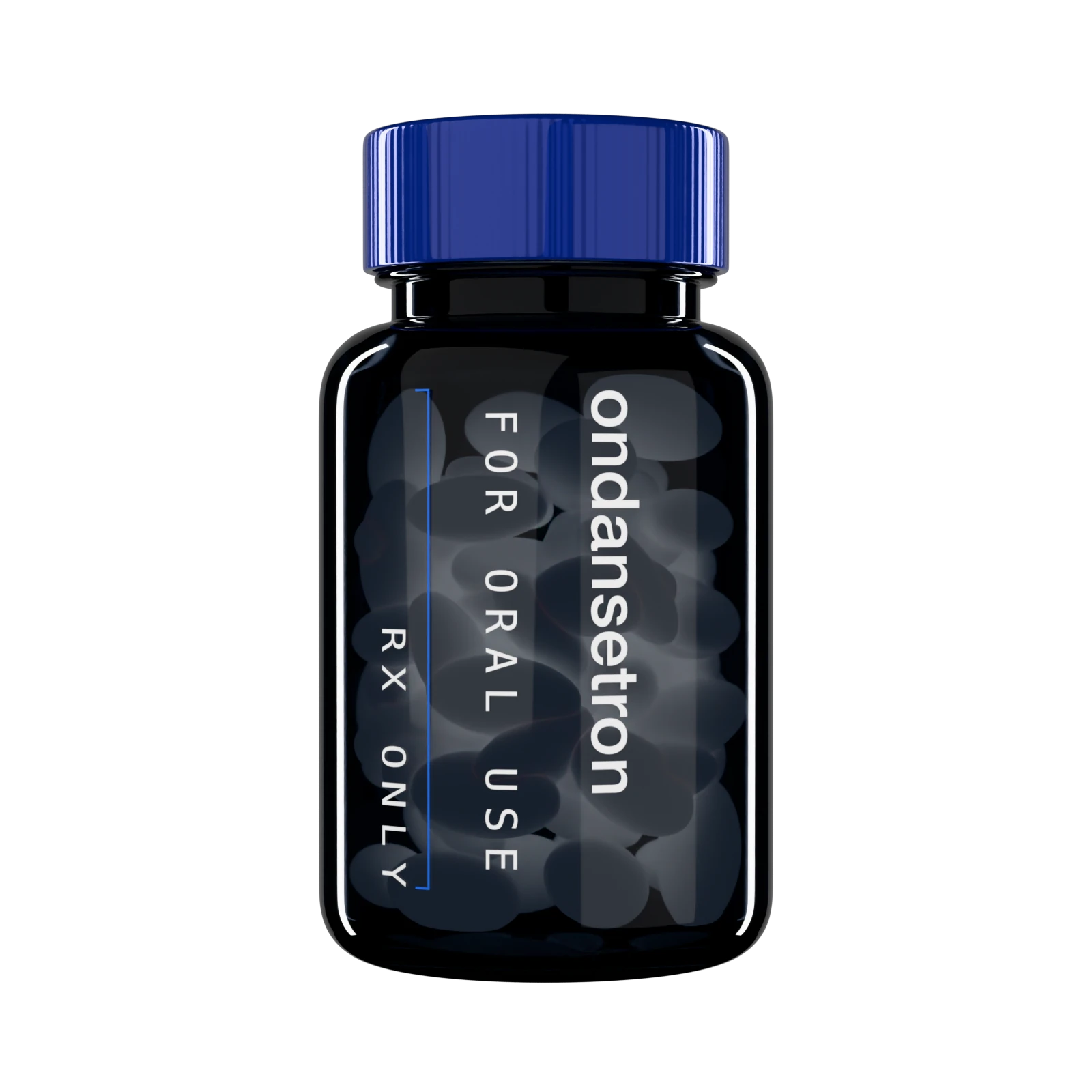
Benefits may include
- Blocks serotonin 5-HT3 receptors in the gut and brain that can trigger nausea and vomiting
- May help prevent or ease nausea and vomiting
- Taken by mouth, at home, when your provider directs
- An off-label option your provider may add if nausea is a problem during GLP-1 treatment
Form
Taken by mouth
On the schedule your provider sets
- 1 month supply
- Starting at$79/month
Prices shown are for the starting dose. Your card is held at checkout. You're billed monthly, as your prescription allows and for what you order. If your plan renews, cancel in your patient portal at least 48 hours before the next renewal to avoid the next charge.
Treatment is prescribed only if a licensed provider decides it is right for you.
- Taken by mouth
- On the schedule your provider sets
- Dose set by your provider
- Anti-nausea (antiemetic)
- Licensed providers
- Licensed U.S. pharmacies
- Secure patient portal
- Discreet delivery
The science
About Ondansetron
- What it is
- Ondansetron is a small-molecule antiemetic, or anti-nausea medication, of the class called selective serotonin 5-HT3 receptor antagonists. Approved ondansetron tablets and orally disintegrating tablets are indicated to prevent nausea and vomiting from cancer chemotherapy, radiation therapy and surgery. Using it for nausea during GLP-1 treatment is an off-label use.
- Class
- Antiemetic (5-HT3 receptor antagonist)
- How it works
- Ondansetron blocks 5-HT3 receptors, a type of serotonin receptor found on the endings of the vagus nerve in the gut and in the area of the brainstem that triggers vomiting. Serotonin released in the gut can start the vomiting reflex through these receptors. The label says it is not certain whether ondansetron acts in the gut, the brain or both, and that it does not block dopamine receptors.
- How it's taken
- By mouth, at home, when and how often your provider directs. Your pharmacy's label gives the directions for your prescription.
Sources
- Ondansetron tablets and orally disintegrating tablets: prescribing information (revised August 2025), DailyMed, U.S. National Library of Medicine. Accessed November 22, 2026.
- Serotonin 5-HT3 receptor antagonists (MeSH descriptor D058831), Medical Subject Headings, U.S. National Library of Medicine. Accessed November 22, 2026.
- Understanding unapproved use of approved drugs "off label", U.S. Food and Drug Administration. Accessed November 22, 2026.
- Ondansetron, MedlinePlus, U.S. National Library of Medicine. Accessed November 22, 2026.
The information on this site is for general education and is not medical advice.

Your care
How it works
Five steps, from your symptoms to ongoing care.
Step 1: Symptoms
Tell us what you're noticing and what you'd like to change, in a short, secure online visit.
Step 2: Labs
Your provider decides whether you need lab work first, and if you do, tells you which tests and why.
Step 3: Provider consultation
A licensed provider reviews your symptoms, history and any lab results, and decides whether treatment is right for you.
Step 4: Treatment
If prescribed, your medication is prepared by a licensed U.S. pharmacy and shipped discreetly to your door.
Step 5: Ongoing care
Regular follow-ups, repeat labs when needed, and support from your provider in your secure patient portal.
What's included
- An online visit with a licensed provider
- Your medication, if prescribed, from a licensed U.S. pharmacy
- Discreet delivery to your door
- Ongoing support from your care team in your patient portal
Treatment is prescribed only if a licensed provider decides it is right for you.
Questions
Questions about Ondansetron
Short answers to what people ask most. Your provider and care team are there for the rest.
What is ondansetron?
A prescription anti-nausea medication taken by mouth. It blocks serotonin 5-HT3 receptors, which can trigger nausea and vomiting. Its approved uses are preventing nausea and vomiting from cancer chemotherapy, radiation therapy and surgery.
Why might a provider add ondansetron during GLP-1 treatment?
Nausea is among the most common side effects of tirzepatide and semaglutide, especially after starting or after a dose increase. If it is a problem for you, your provider may decide to add ondansetron. That is an off-label use: ondansetron's approved uses are chemotherapy, radiation and surgery, and the FDA has not determined that it is safe and effective for nausea from GLP-1 medications. Your provider decides whether it is appropriate for you.
Is ondansetron a weight-loss medication?
No. It is an anti-nausea medication and has no approved use in weight management. It is prescribed alongside a weight medication only if your provider decides it is appropriate, for nausea.
How is ondansetron taken?
By mouth, at home, when and how often your provider directs. Your pharmacy's label gives the directions for your prescription.
Who should not take ondansetron?
The label says not to take it with apomorphine, a medicine for Parkinson's disease, or after a serious allergic reaction to ondansetron. Tell your provider about long QT syndrome or any other heart rhythm problem, and about every medicine you take, especially medicines for depression or migraine.
What are the common side effects of ondansetron?
In the label's studies of ondansetron taken by mouth, the most common were headache, tiredness, constipation and diarrhea. Get medical help right away for signs of a serious allergic reaction, chest pain, or a racing or irregular heartbeat. The full safety information is on this page.
Related
Explore other treatments
- Weekly injectionCompounded TirzepatideA once-weekly GIP and GLP-1 receptor agonist injection, prescribed through Longform Health if a provider decides.Learn more

- Weekly injectionCompounded SemaglutideA once-weekly GLP-1 receptor agonist injection, prescribed through Longform Health if a provider decides.Learn more
Medication appearance varies by pharmacy.
Compounded medications are prepared by a licensed pharmacy for an individual patient and are not reviewed or approved by the FDA for safety, effectiveness or quality.
Ready when you are.
Start your online visit today. If ondansetron is right for you, your provider takes it from there.
Treatment is prescribed only if a licensed provider decides it is right for you.
Important safety information
Read the full safety informationOndansetron
Ondansetron can cause serious allergic reactions, including anaphylaxis; they have been reported in people allergic to other medicines of its class.
It can change the heart's electrical rhythm (QT prolongation), and a dangerous irregular heartbeat called torsades de pointes has been reported in people taking it.
The label says to avoid it with long QT syndrome from birth, and recommends heart monitoring (an ECG) with low potassium or magnesium, heart failure, a slow heart rhythm, or other medicines that prolong the QT interval.
Serotonin syndrome, which can be life-threatening, has been reported, mostly when ondansetron was taken with other medicines that raise serotonin, such as many antidepressants.
Reduced blood flow to the heart (myocardial ischemia) has been reported, mostly when it was given into a vein.
The label also warns that in people recovering from abdominal surgery or having chemotherapy, it can hide the signs of a blocked bowel or a swollen stomach.
Never take it with apomorphine, a medicine for Parkinson's disease: together they can cause a severe drop in blood pressure and loss of consciousness.
Get emergency help for sudden chest pain or chest tightness, and call your provider right away if your heartbeat changes or you feel lightheaded or faint.
The orally disintegrating tablets contain phenylalanine, which matters for people with phenylketonuria (PKU).
Who should not use it
- A past serious allergic reaction, such as anaphylaxis, to ondansetron or any of its ingredients
- Taking apomorphine, a medicine for Parkinson's disease
Common side effects
- Headache
- Tiredness or a general unwell feeling
- Constipation
- Diarrhea
- Dizziness
- Itching
Prescription treatment from a licensed provider, only if appropriate after an online consultation. Treatment is prescribed only if a licensed provider decides it is right for you. A prescription is never guaranteed.
This summary doesn't cover everything. Your provider goes over the risks and side effects with you before you start, and your care team is there if anything comes up.
You are encouraged to report negative side effects of prescription drugs to the FDA. Visit www.fda.gov/medwatch, or call 1-800-FDA-1088.
If you think you are having a medical emergency, call 911.