
Compounded Testosterone
May support sex drive, muscle and bone
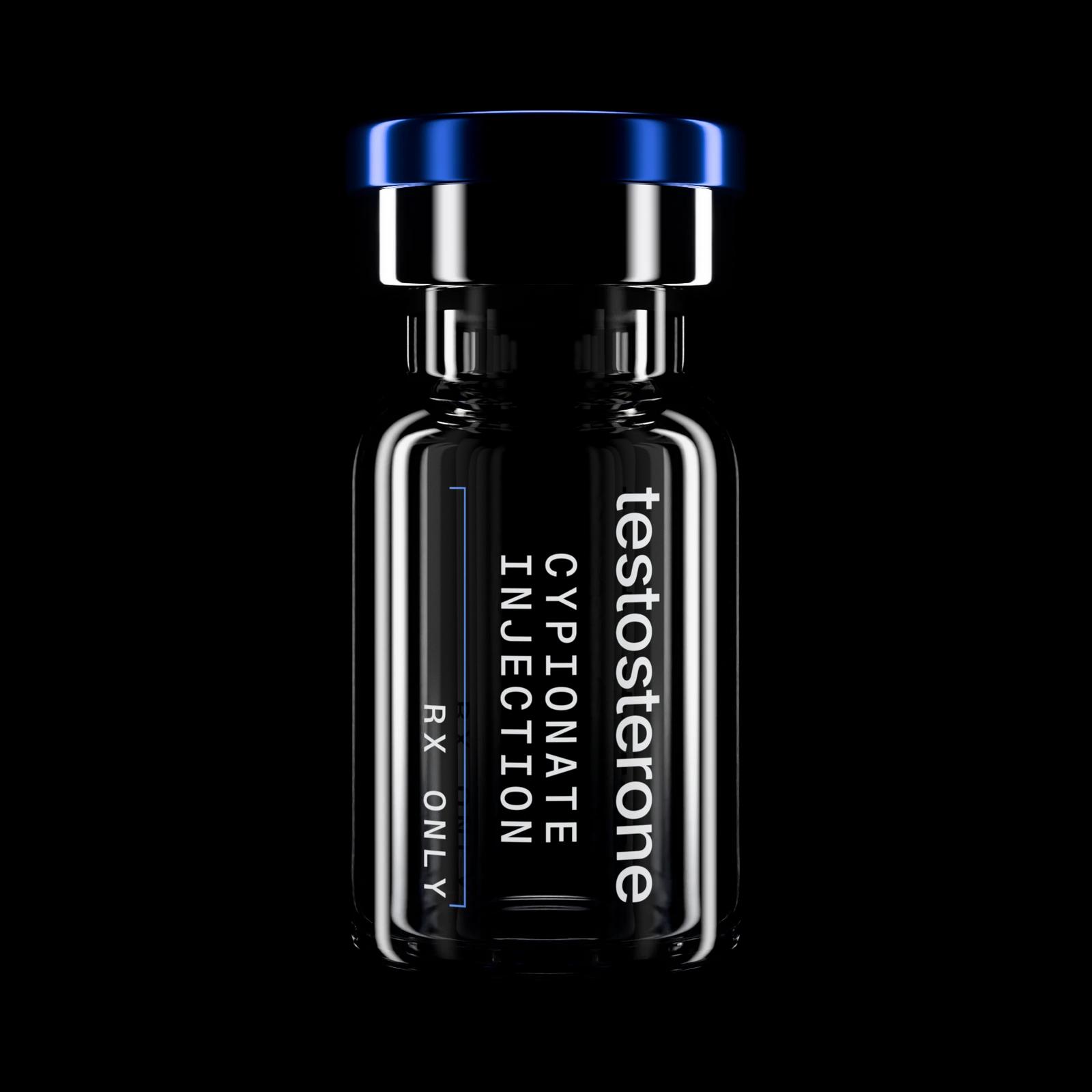
For men with clinically low testosterone, benefits may include
- Testosterone restored to a normal range
- Better libido and sexual function
- Better mood and energy
- More lean muscle mass and bone density
Form
Injection
On the schedule your provider sets
- 3 month minimum
- Starting at$179/month
Includes free consult
Prices shown are for the starting dose. Your card is held at checkout. You're billed monthly, as your prescription allows and for what you order. If your plan renews, cancel in your patient portal at least 48 hours before the next renewal to avoid the next charge.
Treatment is prescribed only if a licensed provider decides it is right for you.
- Injection
- At home
- Dose set by your provider
- Androgen
- Labs before you start
- Licensed providers
- Licensed U.S. pharmacies
- Secure patient portal
- Discreet delivery
The science
About Testosterone
- What it is
- Testosterone cypionate is testosterone, the main male sex hormone, joined to a fatty-acid ester (cypionate) so it dissolves in oil. After an injection, it is absorbed slowly from the oil, so each dose lasts for days rather than hours.
- Class
- Androgen (testosterone ester), Schedule III controlled substance
- How it works
- Once absorbed, it acts as the body's own testosterone does: testosterone, and dihydrotestosterone made from it, bind to androgen receptors inside cells. While you use it, the brain sends the testes less of the signal hormone LH, so the body's own testosterone production falls, and sperm production can fall too. That is why your provider checks your levels and blood counts with follow-up labs.
- How it's taken
- An injection you give yourself at home. Your provider shows you how and where to inject, sets your dose and schedule, and adjusts them based on your follow-up labs.
Sources
- Testosterone cypionate injection, USP: prescribing information (revised October 2025), DailyMed, U.S. National Library of Medicine. Accessed November 18, 2026.
- Testosterone levels test, MedlinePlus, U.S. National Library of Medicine. Accessed November 20, 2026.
- Snyder PJ et al. Effects of testosterone treatment in older men (the NIH-funded Testosterone Trials). New England Journal of Medicine, 2016, PubMed Central, U.S. National Library of Medicine. Accessed November 20, 2026.
- Snyder PJ et al. Effect of testosterone treatment on volumetric bone density and strength in older men with low testosterone: a controlled clinical trial. JAMA Internal Medicine, 2017, PubMed Central, U.S. National Library of Medicine. Accessed November 20, 2026.
The information on this site is for general education and is not medical advice.
Compounded medications are prepared by a licensed pharmacy for an individual patient and are not reviewed or approved by the FDA for safety, effectiveness or quality.

Your care
How it works
Five steps, from your symptoms to ongoing care.
Step 1: Symptoms
Tell us your symptoms, health history, the medicines you take and any allergies. Testosterone is a controlled substance, so federal and state rules set how a provider must evaluate you before prescribing, and that can include a live video visit.
Step 2: Labs
Comprehensive lab work comes first: your provider reviews your testosterone levels before deciding anything.
Step 3: Provider consultation
A licensed provider reviews your symptoms, history and any lab results, and decides whether treatment is right for you.
Step 4: Treatment
If prescribed, your medication is prepared by a licensed U.S. pharmacy and shipped discreetly to your door.
Step 5: Ongoing care
Regular follow-ups, repeat labs when needed, and support from your provider in your secure patient portal.
What's included
- Lab testing before you start, and follow-up labs during treatment
- An online visit with a licensed provider
- Your medication, if prescribed, from a licensed U.S. pharmacy
- Discreet delivery to your door
- Ongoing support from your care team in your patient portal
Treatment is prescribed only if a licensed provider decides it is right for you.
Questions
Questions about Testosterone
Short answers to what people ask most. Your provider and care team are there for the rest.
How is the testosterone injection taken?
As an injection you give yourself at home. Your provider shows you how and where to inject, sets your dose and schedule, and adjusts them based on your follow-up labs. Your care team is there in your patient portal if you have questions.
Who is testosterone therapy for?
Men whose low testosterone is confirmed by symptoms and lab tests. Approved testosterone cypionate is indicated for low testosterone caused by specific conditions of the testes, pituitary gland or hypothalamus, and its safety and effectiveness for low testosterone due to aging alone have not been established. If your provider decides it is not right for you, it is not prescribed.
Do I need labs before testosterone therapy?
Yes. Your provider reviews lab results before deciding whether to prescribe. The prescribing information of approved testosterone cypionate asks for morning testosterone measured on at least two separate days, both below the normal range. During treatment, your provider checks your testosterone, red blood cell count and blood pressure.
Who should not use testosterone?
The approved product's label says not to use it with breast cancer in men, known or suspected prostate cancer, serious heart, liver or kidney disease, or a known allergy to it, and it can harm an unborn baby. Tell your provider about high blood pressure, an enlarged prostate or past blood clots.
What side effects does the testosterone label list?
The approved product's label lists, without saying how often they occur, acne or oily skin, pain or swelling where you inject, breast enlargement or tenderness, and headache, anxiety or low mood. Your provider goes over the risks with you, and the full safety information is on this page.
Is testosterone a controlled substance?
Yes. Testosterone is a Schedule III controlled substance, so federal and state rules set how a provider must evaluate you before prescribing it. It is prescribed only to treat diagnosed low testosterone, never to enhance athletic performance or physique.
Does testosterone therapy affect fertility?
It can. Added testosterone lowers the signals that drive sperm production, and sperm counts can fall. If you may want children, tell your provider before you start, so they can take it into account when deciding on treatment.
Is compounded testosterone FDA-approved?
No. Compounded testosterone is prepared by a licensed pharmacy for you, from a prescription, and is not reviewed or approved by the FDA for safety, effectiveness or quality.
Related
Explore other treatments
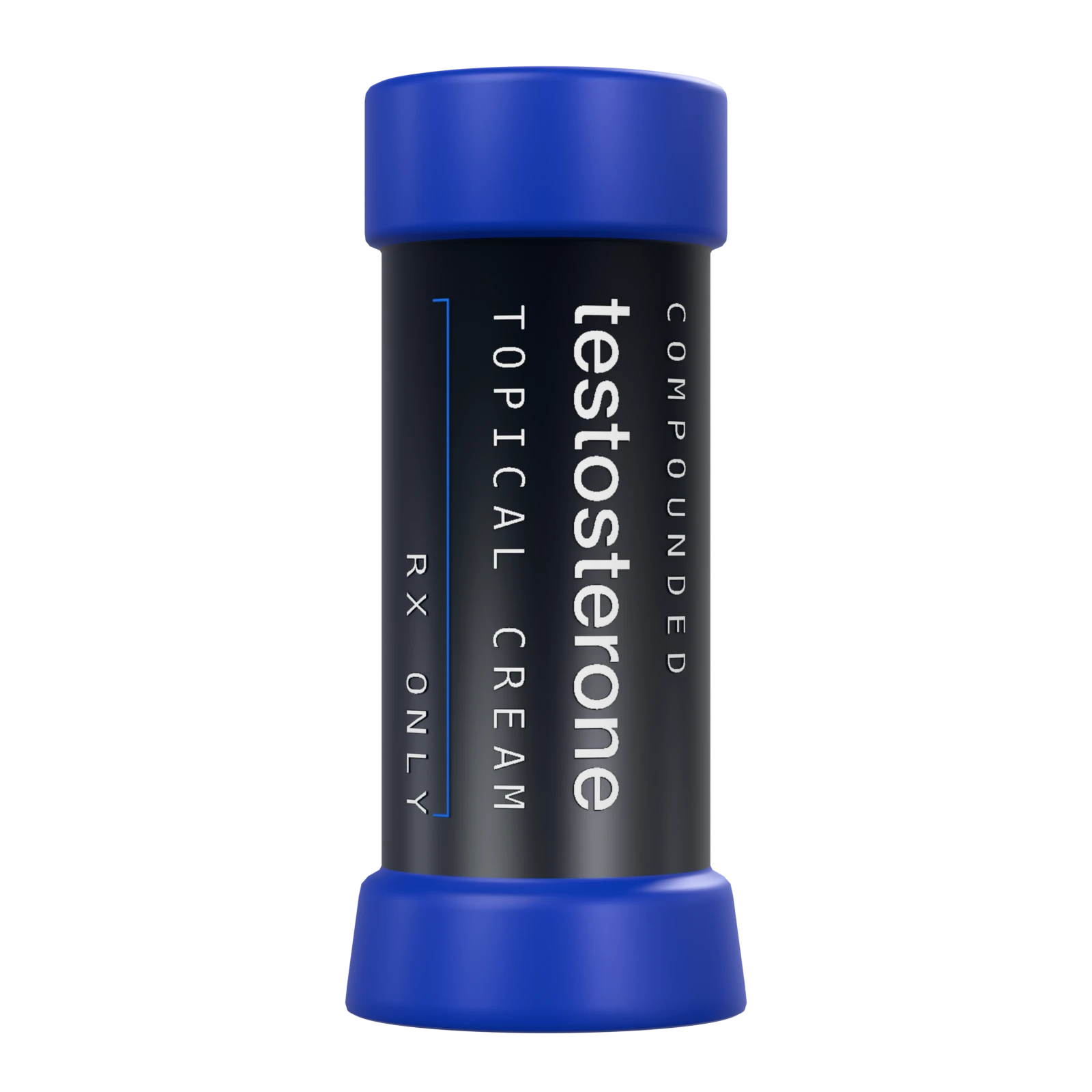
- CreamCompounded Testosterone CreamA testosterone cream applied at home, for men with lab-confirmed low testosterone, if a provider decides.Learn more
- Taken by mouthCompounded EnclomipheneA selective estrogen receptor modulator (SERM) taken by mouth, not testosterone, if a provider prescribes it.Learn more
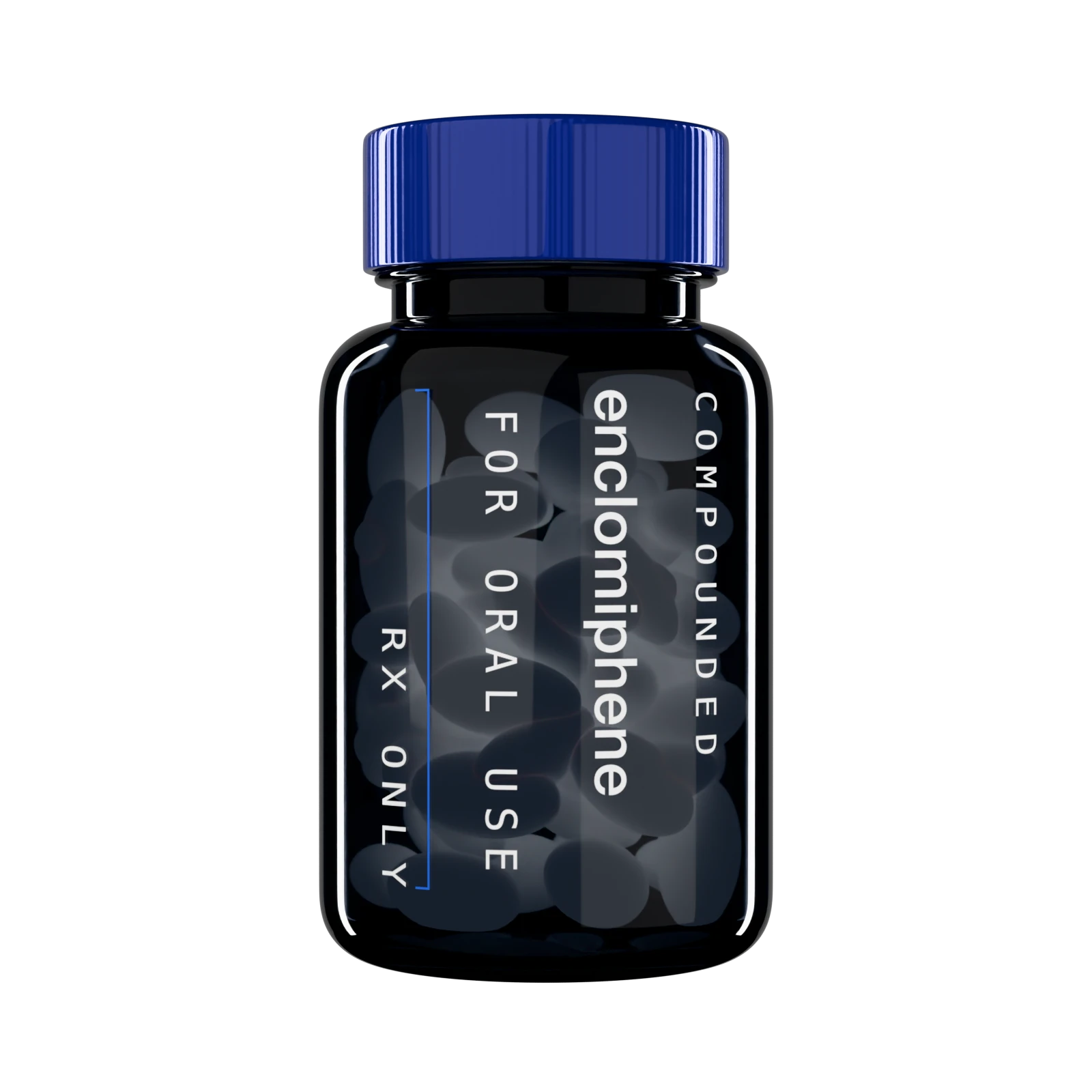
Medication appearance varies by pharmacy.
Compounded medications are prepared by a licensed pharmacy for an individual patient and are not reviewed or approved by the FDA for safety, effectiveness or quality.
Ready when you are.
Start your online visit today. If testosterone is right for you, your provider takes it from there.
Treatment is prescribed only if a licensed provider decides it is right for you.
Important safety information
Read the full safety informationCompounded Testosterone
Testosterone can raise blood pressure, which can increase the risk of heart attack and stroke over time; your provider checks it before and during treatment, and testosterone is not recommended with uncontrolled high blood pressure.
In a large trial of testosterone gel in men with heart disease or heart risk factors, heart attack, stroke and heart-related death were similar with testosterone and placebo; the injection's own label still calls the evidence on these risks inconclusive.
Blood clots in the legs or lungs have been reported: get medical help for pain, swelling or warmth in a leg, or sudden shortness of breath.
Testosterone can raise your red blood cell count, so your blood is checked during treatment, and it can lower sperm production.
Older men may have a higher risk of an enlarged prostate and prostate cancer, so your provider checks your prostate health before and during treatment.
In men with an enlarged prostate, it can worsen urinary symptoms and can suddenly block the flow of urine.
In people with heart, kidney or liver disease, fluid retention (swelling) can be serious and can lead to heart failure.
It can raise calcium levels in the blood in people who are immobilized.
Tell your provider if you take a blood thinner by mouth or insulin: the label says testosterone can make oral blood thinners stronger, and in people with diabetes it can lower blood sugar and the amount of insulin needed.
The label does not recommend it for nursing mothers.
It is a Schedule III controlled substance.
Misuse, usually at high doses, can cause serious heart and psychiatric problems, and it is prescribed only for diagnosed low testosterone, never to enhance athletic performance.
Compounded testosterone has no FDA labeling of its own.
This summary is drawn from the FDA labeling of an approved testosterone cypionate injection, which was not studied with compounded preparations.
Compounded testosterone is not FDA-approved.
Who should not use it
- Breast cancer in men
- Known or suspected prostate cancer
- Pregnancy (testosterone can harm an unborn baby)
- Serious heart, liver or kidney disease
- A known allergy to testosterone cypionate or its ingredients
Common side effects
- Acne or oily skin
- Pain or swelling where you inject
- Breast enlargement or tenderness, which sometimes persists
- Changes in sex drive, or erections that happen too often or last too long
- Headache, anxiety or low mood
- More body or facial hair, or male-pattern hair loss
- Swelling from fluid retention
- Nausea
- Tingling or prickling of the skin
- Higher cholesterol
- Rarely, fluid under the retina that can affect vision (central serous chorioretinopathy)
Prescription treatment from a licensed provider, only if appropriate after an online consultation. Treatment is prescribed only if a licensed provider decides it is right for you. A prescription is never guaranteed.
This summary doesn't cover everything. Your provider goes over the risks and side effects with you before you start, and your care team is there if anything comes up.
You are encouraged to report negative side effects of prescription drugs to the FDA. Visit www.fda.gov/medwatch, or call 1-800-FDA-1088.
If you think you are having a medical emergency, call 911.