
Compounded Testosterone Cream
May support sex drive, muscle and bone
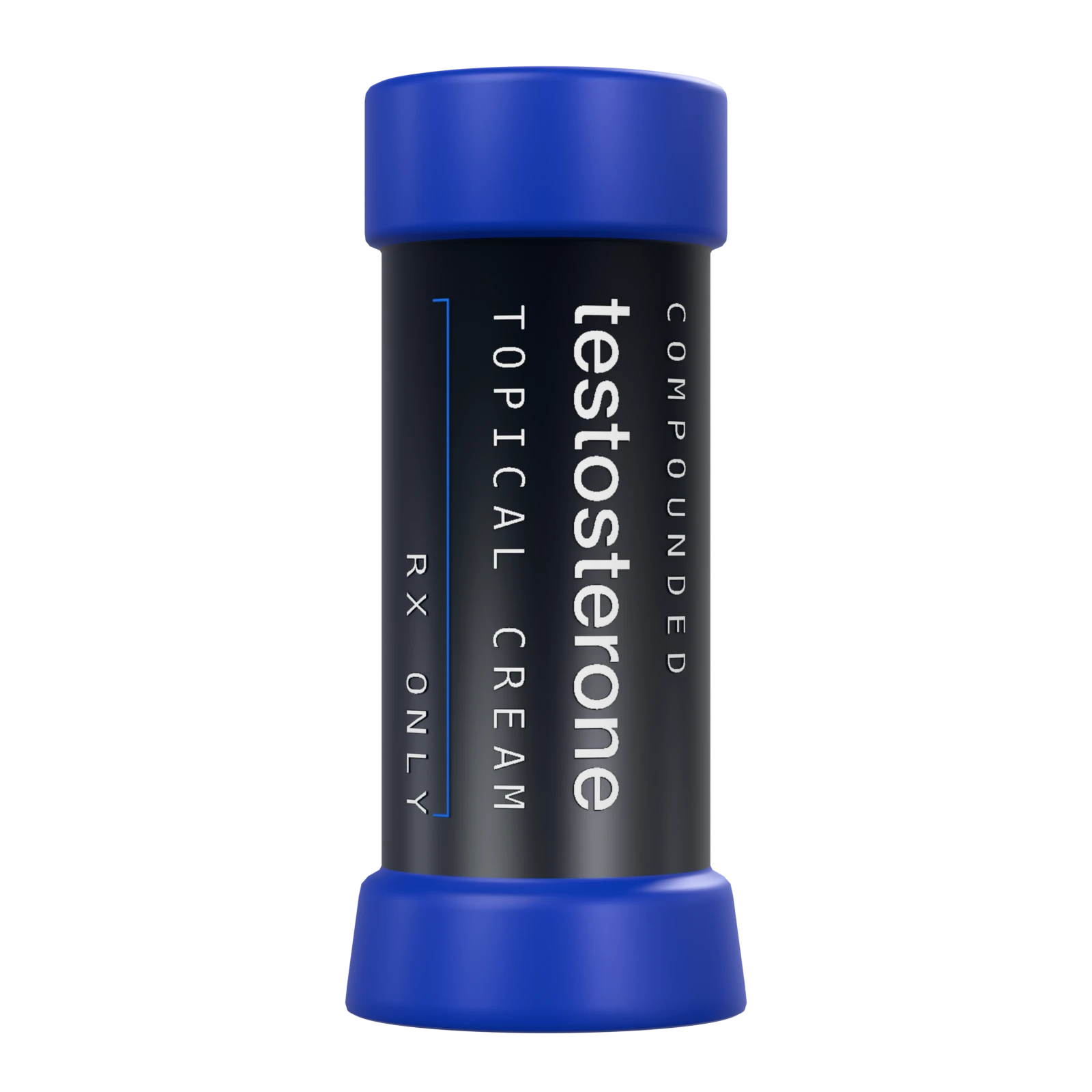
For men with clinically low testosterone, benefits may include
- Testosterone restored to a normal range
- Better libido and sexual function
- Better mood and energy
- More lean muscle mass and bone density
Form
Cream
On the schedule your provider sets
- 3 month minimum
- Starting at$179/month
Includes free consult
Prices shown are for the starting dose. Your card is held at checkout. You're billed monthly, as your prescription allows and for what you order. If your plan renews, cancel in your patient portal at least 48 hours before the next renewal to avoid the next charge.
Treatment is prescribed only if a licensed provider decides it is right for you.
- Cream, on the skin
- At home
- Dose set by your provider
- Labs before you start
- Licensed providers
- Licensed U.S. pharmacies
- Secure patient portal
- Discreet delivery
The science
About Testosterone Cream
- What it is
- Testosterone is the main male sex hormone. Testosterone cream is testosterone itself in a cream base that a compounding pharmacy prepares, absorbed through the skin. It is a different preparation from the approved testosterone gels, and the FDA has not reviewed how much testosterone a compounded cream delivers.
- Class
- Androgen, Schedule III controlled substance
- How it works
- Once absorbed, it acts as the body's own testosterone does: testosterone, and dihydrotestosterone made from it, bind to androgen receptors inside cells. While you use it, the brain sends the testes less of the signal hormone LH, so the body's own testosterone production falls, and sperm production can fall too. That is why your provider checks your levels and blood counts with follow-up labs.
- How it's taken
- A cream you apply to your skin at home, on the schedule your provider sets. Your provider shows you how much to apply and where. Afterwards, wash your hands with soap and water, let the cream dry and cover the area with clothing, and wash the area before any skin-to-skin contact.
Sources
- Testosterone gel for topical use: prescribing information (revised August 2025), DailyMed, U.S. National Library of Medicine. Accessed November 19, 2026.
- Testosterone topical, MedlinePlus, U.S. National Library of Medicine. Accessed November 20, 2026.
- Testosterone levels test, MedlinePlus, U.S. National Library of Medicine. Accessed November 20, 2026.
- Snyder PJ et al. Effects of testosterone treatment in older men (the NIH-funded Testosterone Trials). New England Journal of Medicine, 2016, PubMed Central, U.S. National Library of Medicine. Accessed November 20, 2026.
- Snyder PJ et al. Effect of testosterone treatment on volumetric bone density and strength in older men with low testosterone: a controlled clinical trial. JAMA Internal Medicine, 2017, PubMed Central, U.S. National Library of Medicine. Accessed November 20, 2026.
The information on this site is for general education and is not medical advice.
Compounded medications are prepared by a licensed pharmacy for an individual patient and are not reviewed or approved by the FDA for safety, effectiveness or quality.

Your care
How it works
Five steps, from your symptoms to ongoing care.
Step 1: Symptoms
Tell us your symptoms, health history, the medicines you take and any allergies. Testosterone is a controlled substance, so federal and state rules set how a provider must evaluate you before prescribing, and that can include a live video visit.
Step 2: Labs
Comprehensive lab work comes first: your provider reviews your testosterone levels before deciding anything.
Step 3: Provider consultation
A licensed provider reviews your symptoms, history and any lab results, and decides whether treatment is right for you.
Step 4: Treatment
If prescribed, your medication is prepared by a licensed U.S. pharmacy and shipped discreetly to your door.
Step 5: Ongoing care
Regular follow-ups, repeat labs when needed, and support from your provider in your secure patient portal.
What's included
- Lab testing before you start, and follow-up labs during treatment
- An online visit with a licensed provider
- Your medication, if prescribed, from a licensed U.S. pharmacy
- Discreet delivery to your door
- Ongoing support from your care team in your patient portal
Treatment is prescribed only if a licensed provider decides it is right for you.
Questions
Questions about Testosterone Cream
Short answers to what people ask most. Your provider and care team are there for the rest.
How is testosterone cream used?
You apply it to your skin at home, on the schedule your provider sets, and your provider shows you how much and where. Then wash your hands with soap and water, let the cream dry and cover the area with clothing, and wash the area before any skin-to-skin contact, so the testosterone does not pass to anyone else.
Who is testosterone cream for?
Men whose low testosterone is confirmed by symptoms and lab tests. Approved testosterone gel is indicated for low testosterone caused by specific conditions of the testes, pituitary gland or hypothalamus, and its safety and effectiveness for low testosterone due to aging alone have not been established. If your provider decides it is not right for you, it is not prescribed.
Do I need labs before starting?
Yes. Your provider reviews lab results before deciding whether to prescribe. The prescribing information of approved testosterone gel asks for morning testosterone measured on at least two separate days, both below the normal range. During treatment, your provider checks your testosterone, red blood cell count and blood pressure.
Why must children and women avoid the area where I apply the cream?
Testosterone on your skin can rub off onto anyone who touches the area. The label of approved testosterone gel carries a boxed warning: children who touched skin where a man had applied it have shown signs of early puberty, and women can develop changes in body hair or more acne. If a child or a woman touches the area, wash it off their skin with soap and water right away, and if you notice any of these signs, stop using it and call your provider.
How is testosterone cream different from testosterone gel?
Both are testosterone applied to the skin. Approved testosterone gels have FDA labeling; compounded testosterone cream is prepared by a pharmacy and is not FDA-approved. The gel label notes that topical products with different doses, strengths or application steps can deliver different amounts of testosterone. Either one can pass testosterone to other people through skin contact.
Who should not use testosterone cream?
The approved gel's label says not to use it with breast cancer in men or known or suspected prostate cancer, and testosterone can harm an unborn baby, so a woman who is pregnant must avoid the area where you apply it. Tell your provider about high blood pressure, an enlarged prostate, sleep apnea or past blood clots.
What side effects does the gel label list?
The approved gel's label lists side effects including a higher PSA (a blood test used to screen for prostate cancer), mood swings, higher blood pressure, a higher red blood cell count, skin irritation where you apply it, and erections more often than usual. Your provider goes over the risks with you, and the full safety information is on this page.
Is testosterone a controlled substance?
Yes. Testosterone is a Schedule III controlled substance, so federal and state rules set how a provider must evaluate you before prescribing it. It is prescribed only to treat diagnosed low testosterone, never to enhance athletic performance or physique.
Does testosterone therapy affect fertility?
It can. Added testosterone lowers the signals that drive sperm production, and sperm counts can fall. If you may want children, tell your provider before you start, so they can take it into account when deciding on treatment.
Is compounded testosterone cream FDA-approved?
No. Compounded testosterone cream is prepared by a licensed pharmacy for you, from a prescription, and is not reviewed or approved by the FDA for safety, effectiveness or quality.
Related
Explore other treatments
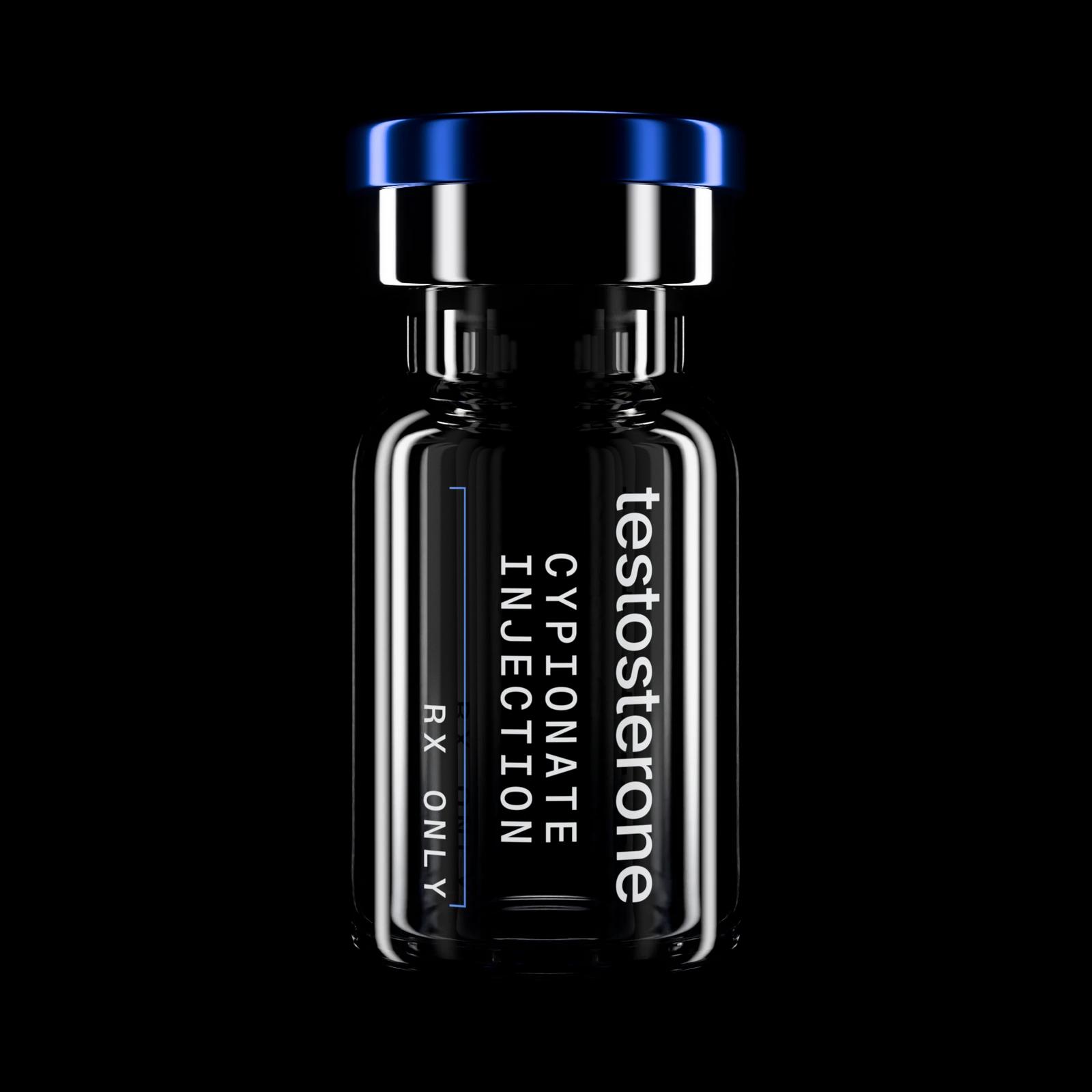
- InjectionCompounded TestosteronePersonalized testosterone therapy for diagnosed low testosterone, guided by comprehensive labwork, provider evaluation, and ongoing monitoring.Learn more
- Taken by mouthCompounded EnclomipheneA selective estrogen receptor modulator (SERM) taken by mouth, not testosterone, if a provider prescribes it.Learn more
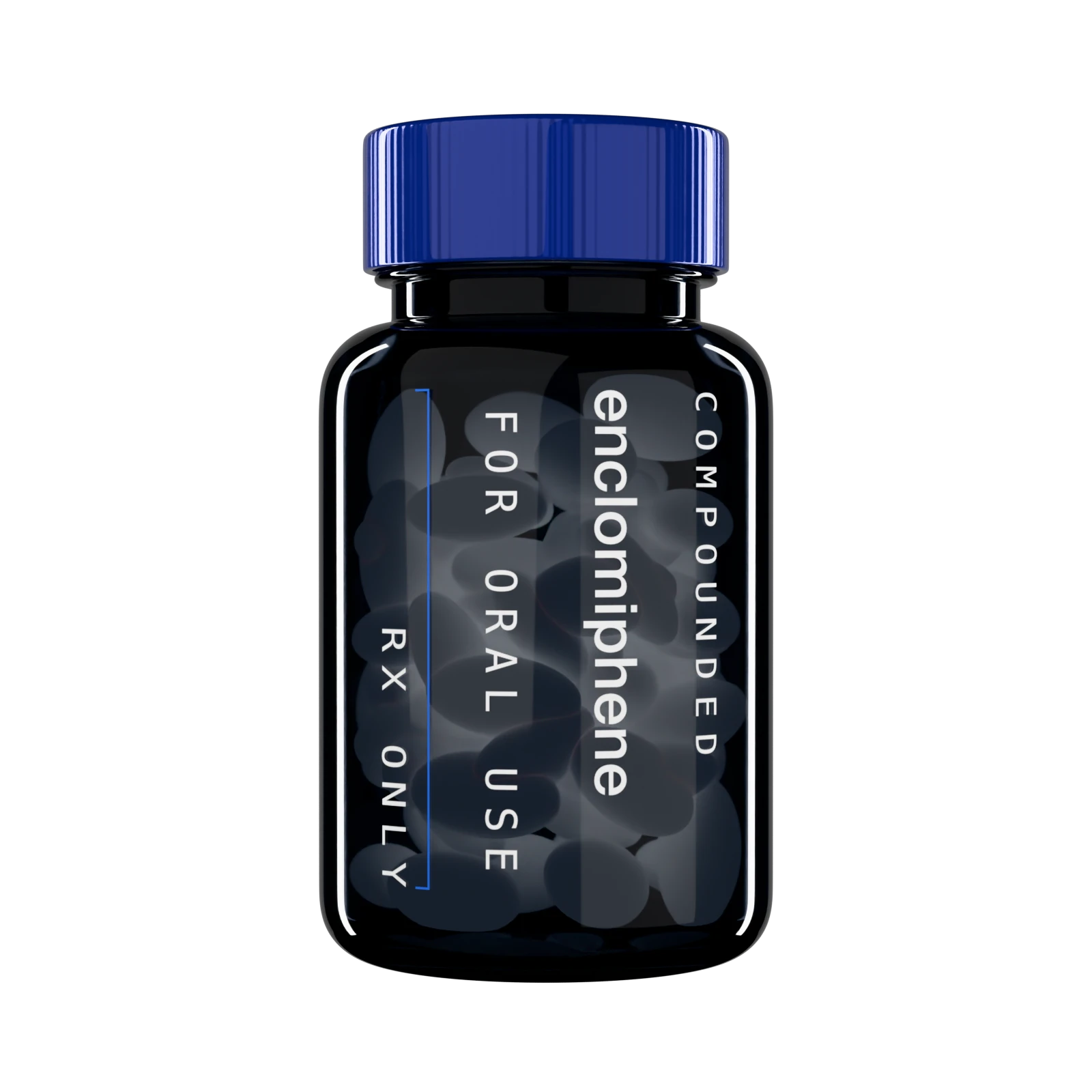
Medication appearance varies by pharmacy.
Compounded medications are prepared by a licensed pharmacy for an individual patient and are not reviewed or approved by the FDA for safety, effectiveness or quality.
Ready when you are.
Start your online visit today. If testosterone cream is right for you, your provider takes it from there.
Treatment is prescribed only if a licensed provider decides it is right for you.
Important safety information
Read the full safety informationCompounded Testosterone Cream
Approved testosterone gel carries a boxed warning.
Testosterone on your skin can pass to other people: children who touched skin where a man had applied testosterone gel have shown signs of early puberty, such as an enlarged penis or clitoris, early pubic hair, erections or sexual urges, and aggressive behavior, and women who touch it can develop changes in body hair or a large increase in acne.
To lower the risk, wash your hands with soap and water right after applying, cover the area with clothing once it has dried, and wash the area well with soap and water before any skin-to-skin contact.
If a child or a woman touches the area, wash it off their skin with soap and water right away, and if you notice any of these signs in a child or a woman, stop using it and call your provider right away.
Women who are pregnant should avoid contact with the area, because testosterone can harm an unborn baby.
Other serious risks include:
- higher blood pressure, which can increase the risk of heart attack and stroke over time (the label does not recommend it with uncontrolled high blood pressure)
- blood clots in the legs or lungs
- a higher red blood cell count
- worse urinary symptoms in men with an enlarged prostate, and a possibly higher risk of prostate cancer
- serious fluid retention (swelling) in people with heart, kidney or liver disease, which can lead to heart failure
- lower sperm production at large doses
- breast enlargement
- worse sleep apnea, especially with obesity or chronic lung disease
- changes in cholesterol and other blood fats
Your provider checks your blood pressure, blood counts and prostate health before and during treatment.
Get medical help for leg pain, swelling or redness, trouble breathing or chest pain.
Tell your provider if you take insulin, a blood thinner or a corticosteroid: the label says testosterone can lower blood sugar and the amount of insulin needed in people with diabetes, can change how blood thinners work, and can add to fluid retention with corticosteroids.
It is a Schedule III controlled substance.
Misuse, usually at high doses, can cause serious heart and psychiatric problems, and it is prescribed only for diagnosed low testosterone, never to enhance athletic performance.
Compounded testosterone cream has no FDA labeling of its own.
This summary is drawn from the FDA labeling of an approved testosterone gel, which was not studied with compounded preparations.
Compounded testosterone cream is not FDA-approved.
Who should not use it
- Breast cancer in men
- Known or suspected prostate cancer
- Pregnancy (testosterone can harm an unborn baby)
Common side effects
- A higher PSA (a blood test used to screen for prostate cancer)
- Mood swings
- Higher blood pressure
- A higher red blood cell count
- Skin irritation where you apply it
- Erections more often than usual, or erections that last a long time
- Acne
- Needing to urinate more often
- Higher cholesterol or other blood fats
- Trouble sleeping
- Irregular heartbeat, including atrial fibrillation
- Kidney injury
- Bone fractures
Prescription treatment from a licensed provider, only if appropriate after an online consultation. Treatment is prescribed only if a licensed provider decides it is right for you. A prescription is never guaranteed.
This summary doesn't cover everything. Your provider goes over the risks and side effects with you before you start, and your care team is there if anything comes up.
You are encouraged to report negative side effects of prescription drugs to the FDA. Visit www.fda.gov/medwatch, or call 1-800-FDA-1088.
If you think you are having a medical emergency, call 911.